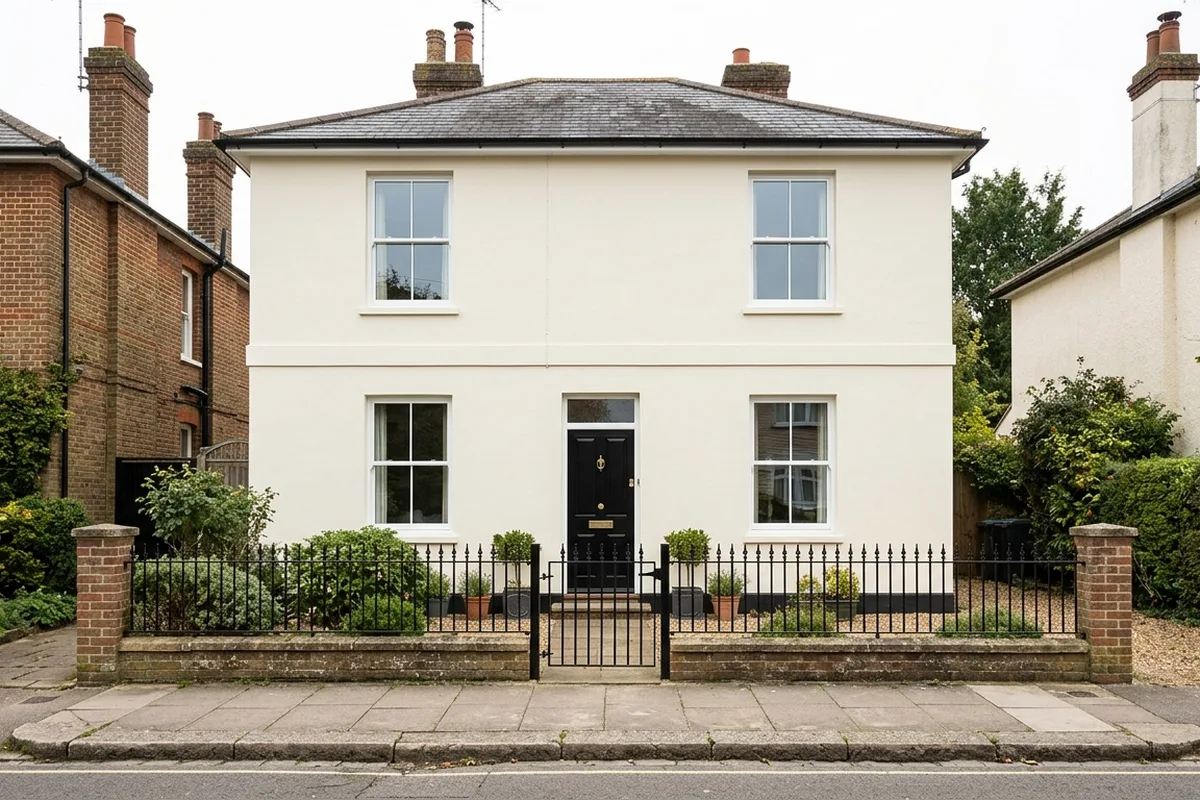
An aluminium heritage sash is a slim vertical slider with a painted-metal finish. On Sevenoaks houses it is chosen for one reason: the frames are narrower than uPVC, so a Georgian or early Victorian front with fine proportions keeps more of them. It is the premium option here, priced above uPVC and in the same range as timber.
Where it suits
The Sevenoaks High Street appraisal notes that sashes belong to the higher status 18th and 19th century buildings, and that stucco and London stock brick sit alongside red brick and ragstone. Those are the fronts where slim frames show. The same goes for the polite Georgian houses on Westerham's Vicarage Hill and around Brasted's High Street, where they are not listed.
Narrow meeting rails and slim outer frames, close to timber sightlines.
Powder-coated colour, so off-white, cream or a heritage green can be matched to the house.
No repainting, and no swelling or sticking in a wet winter.
What it is not
It is not a cheaper alternative to timber. Its price starts above the timber figure, so if budget is the deciding factor on an unlisted house, uPVC sash is the better choice. If the house is listed, aluminium will usually not get listed building consent either, and timber is the route.
An example in Riverhead
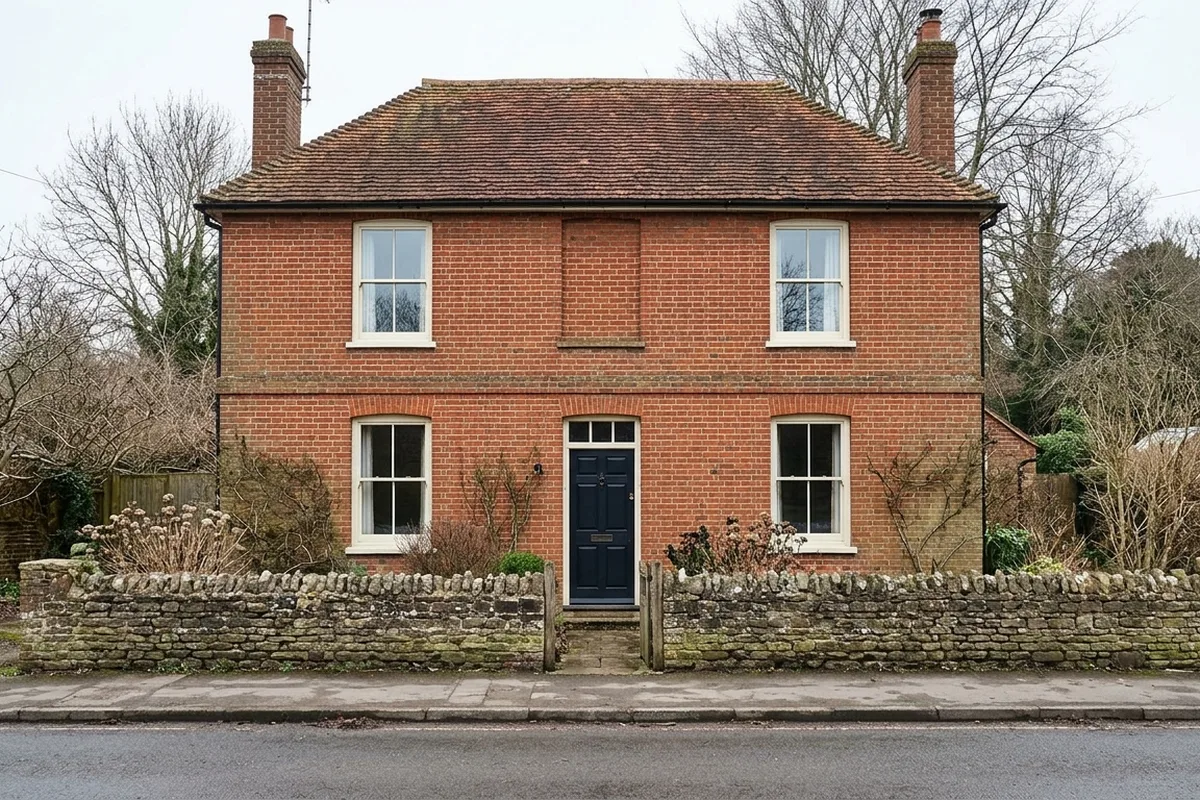
A symmetrical 19th-century brick house in Riverhead, with two sashes on each floor, is a typical candidate. The Riverhead appraisal recommends that windows are normally painted white and warns against poor-quality replacements on London Road, so a slim off-white frame is a fair answer for an unlisted house there.
Illustrative example of a typical job
Riverhead 19th-century brick house: four aluminium heritage sashes
A double-fronted 19th-century red brick house of the kind the Riverhead appraisal describes as the bulk of the village's older unlisted buildings. Two sashes on each floor, symmetrical about the door.
Four aluminium heritage sashes (slim vertical sliders) in white, two-over-two glazing bars
Frames set back in the reveal to keep the depth of the brick openings
Scaffold for the two upper windows
Typically £11,350 to £17,700, supplied and fitted, including VAT